ABOUT THE EXHIBITION
Press Kit
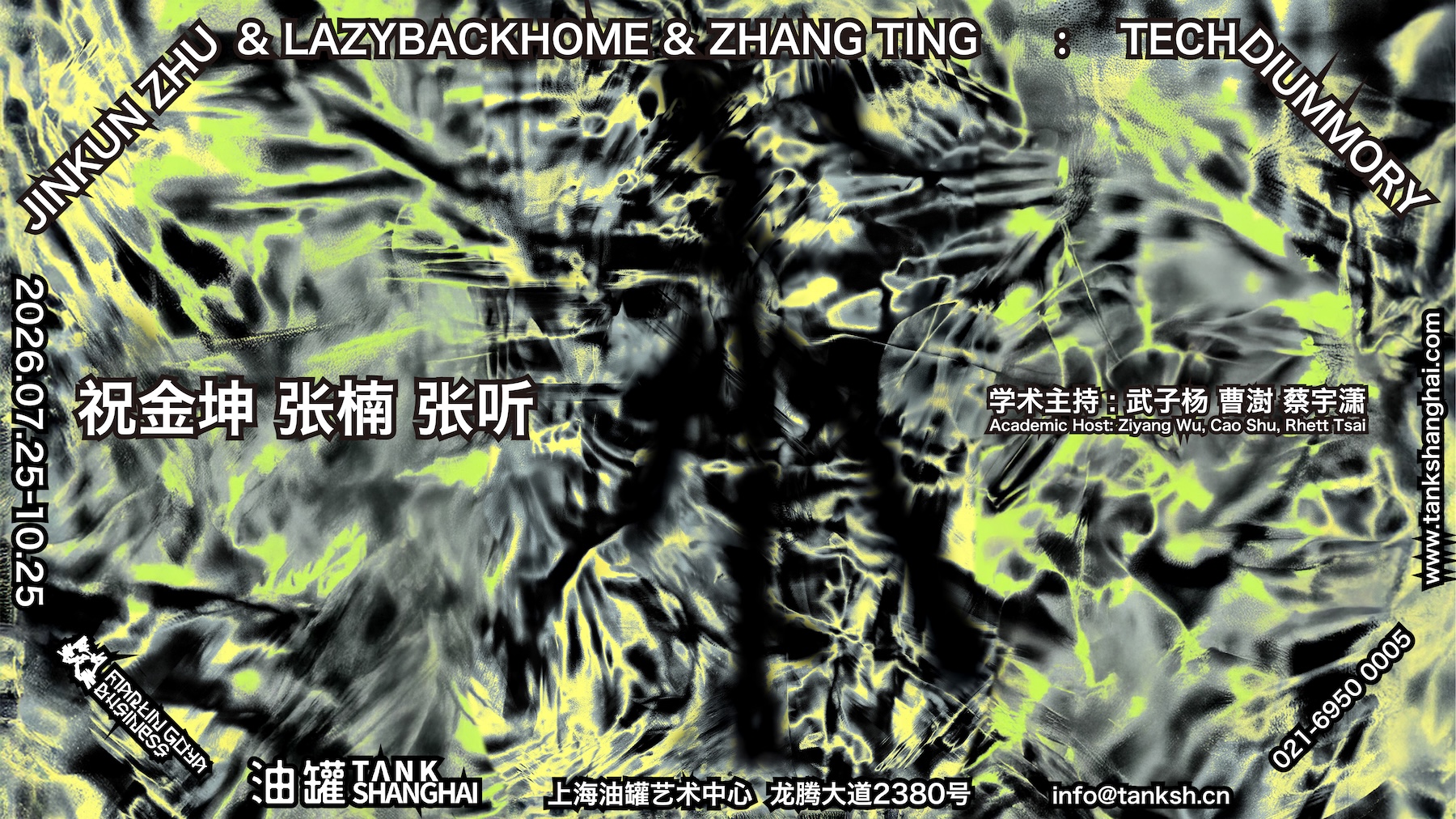
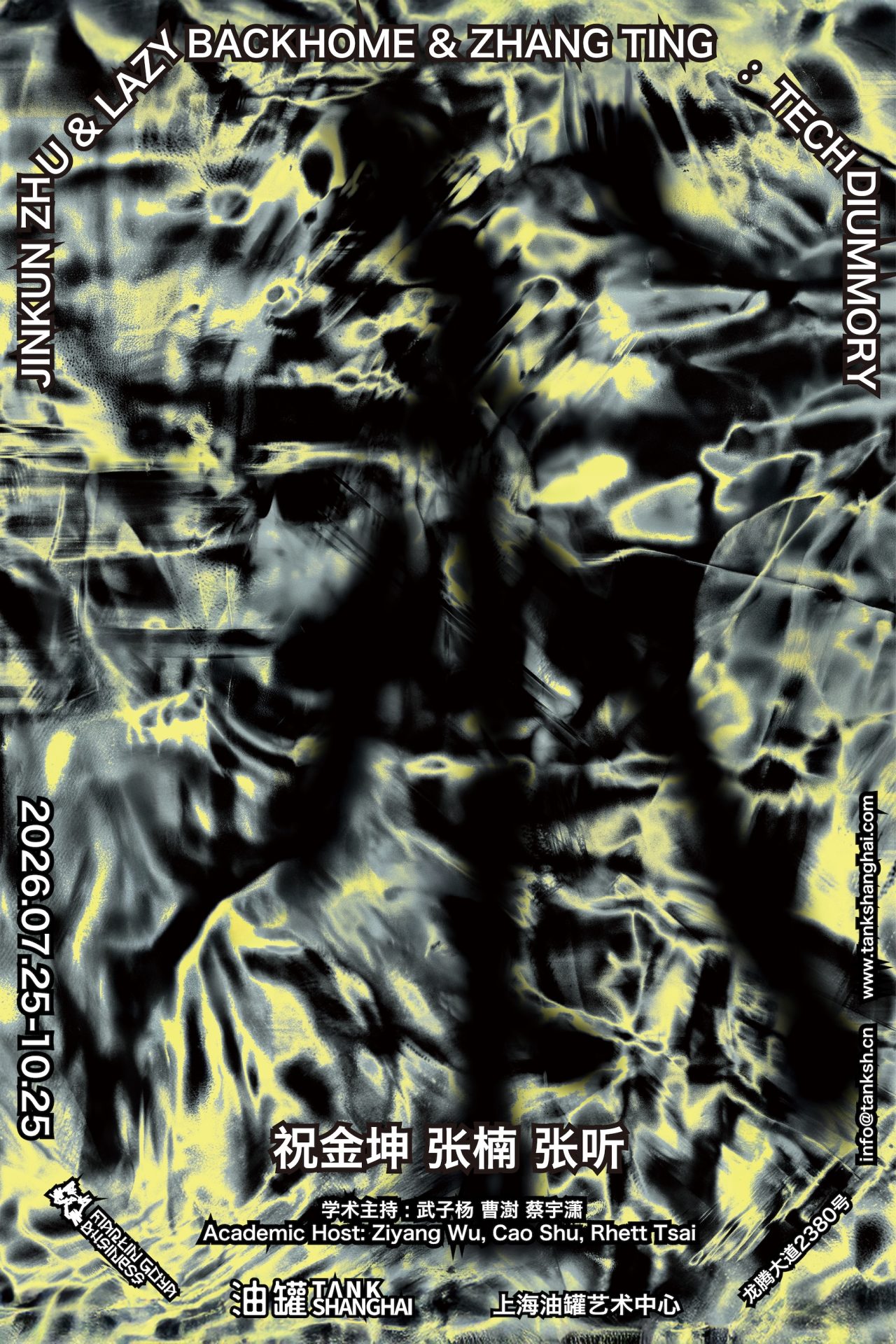
TANK Shanghai proudly presents TechDiumMory, a Threefold Exhibition featuring works by Zhu Jinkun, LazyBackHome, and Zhang Ting. Opening on 24 July 2026, the exhibition will be on view until 25 October 2026.
“Shu (术)” originally referred to a method of making and transforming the world. Today, this “Shu” has expanded into a mechanism for producing reality itself, operating between technological systems, media circulation, and cultural memory. As Technology, Medium, and Memory become increasingly intertwined, human experience can no longer be separated into independent parts. Together, they form a new structure through which reality is continuously produced.
Fire@Data Center 2026 is Zhu Jinkun’s delayed response to his first solo exhibition five years ago. Over the past five years, technological development has continuously reshaped the way reality operates. Artificial intelligence, algorithms, computational networks, and automated infrastructures have gradually become the underlying structures that organize the world. Reality is increasingly transformed into data, models, and systems. Geopolitics, economic structures, natural environments, and individual experiences are all converted into computable and reorganizable units of information, constantly circulating and updating within global networks.
Fire@Data Center 2026 traces this ongoing transformation: reality is no longer an object reflected by technology, but something continuously generated through computation, transmission, and algorithms — an open structure that remains in constant evolution.
LazyBackHome presents an “image war” after the loss of textual authority, unfolding through the fictional public event “T-DOS (The Day of Strikes)”. The work explores how a bird-strike accident gradually detaches from the original event through the combined forces of news media, social platforms, and popular circulation. It transforms into an endlessly reproducible symbol without fixed meaning, eventually gaining new social value through continuous replication like a meme.
“Freshly Chopped Reality” serves as the central metaphor, comparing reality to a salad that is constantly chopped, mixed, and reconstructed. Alchemy is borrowed as a methodology of image production — revealing how authoritative images are continuously created, circulated, and collapsed within media loops, becoming an endless “dialogue with the underworld” without response.
In this exhibition, Zhang Ting draws on the narrative format of Humor Master, a Chinese comic magazine from the 1980s, to construct a new narrative context for the character “Xiaoming.” As a recurring figure in China’s compulsory education textbooks, workbooks, and reading materials, Xiaoming does not represent any specific child but functions instead as a standardized educational symbol reproduced through repetition.
Using the motifs of the “house” and “adventure” as narrative threads, Zhang Ting relocates this long-standing textbook character into a series of constructed spatial situations, transforming him from a model of prescribed educational behavior into the protagonist of the exhibition’s narrative. At the same time, Zhang Ting incorporates pirated toys, cartoon characters, and everyday objects from his childhood, reorganizing them within Xiaoming’s reconstructed environment into a shared yet complex generational experience. Throughout the exhibition, Xiaoming is repeatedly placed in situations of danger and disorder. This departure from the standardized narrative reveals the distance between individual lived experience and educational norms, while reflecting the profound ways in which pirated visual culture, existing beyond the framework of formal education, has shaped the lived experience of an entire generation.
As Friedrich Kittler emphasized, media is not merely a carrier of information, but the condition that determines how information can exist in the first place. From this perspective, reality itself can be understood as an operational system sustained by different media technologies.
Therefore, “TechDiumMory ” does not refer to a single narrative, but rather to a continuously operating system of reality production. The bedroom, the ruins, the cabin, and the exhibition space are not separate locations, but manifestations of the same narrative structure entering and unfolding within everyday life.
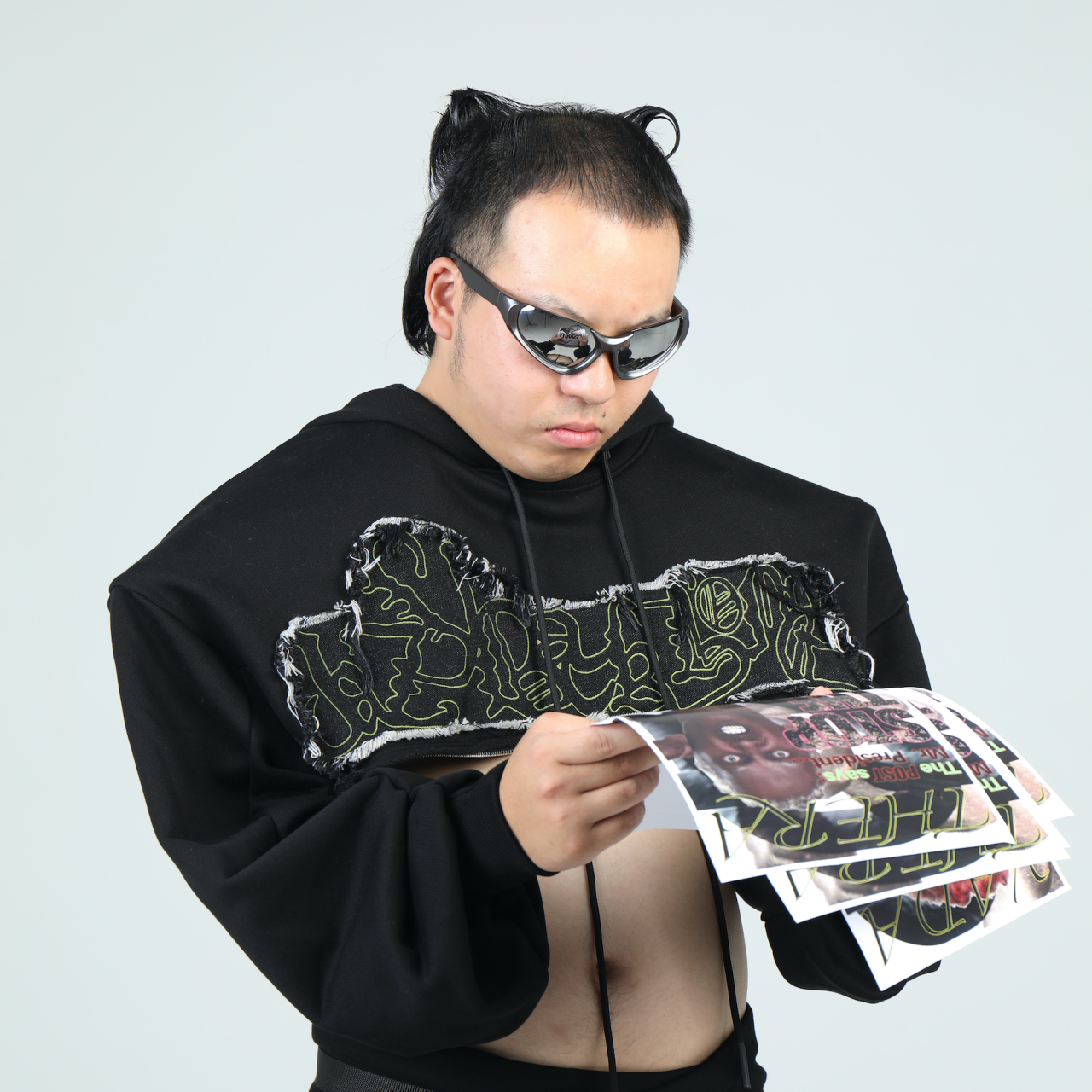
ABOUT THE ARTIST
Jinkun Zhu
He graduated from the School of Intermedia Art at the China Academy of Art. His practice focuses on the complex landscape of networked society, revealing the aura constructed by media and technological authority, and responding to—or subverting—reality through its inherent absurdities. Operating between the fractured realms of hardware and software, his work interrogates the “hyperreality” of contemporary society and the relationship between signs and images, employing the computer as a medium to articulate the violence and impotence embedded in processes of implosion.
His multidisciplinary practice encompasses video, installation, and sound. In early 2023, he undertook a residency at Aranya Art Center, and later that year presented a performance as part of an exchange program organized by Martin Goya Business and the British Council. His works have been exhibited internationally at venues including 660 Madison Avenue (New York), COMA Gallery, the Venice Arsenale, Zhejiang Art Museum, Power Station of Art (Shanghai), Martin Goya Business, K11 Art Museum, Tank Shanghai, West Bund Art Center, Liu Haisu Art Museum, Taka Ishii Gallery, CEF Center for Experimental Film, and Tianmu Li.
His works are held in the collections of institutions such as Martin Goya Business, White Rabbit Gallery (Australia), CC Foundation, X Museum, B1OCK Gallery, and the Art Museum of the China Academy of Art, among others.
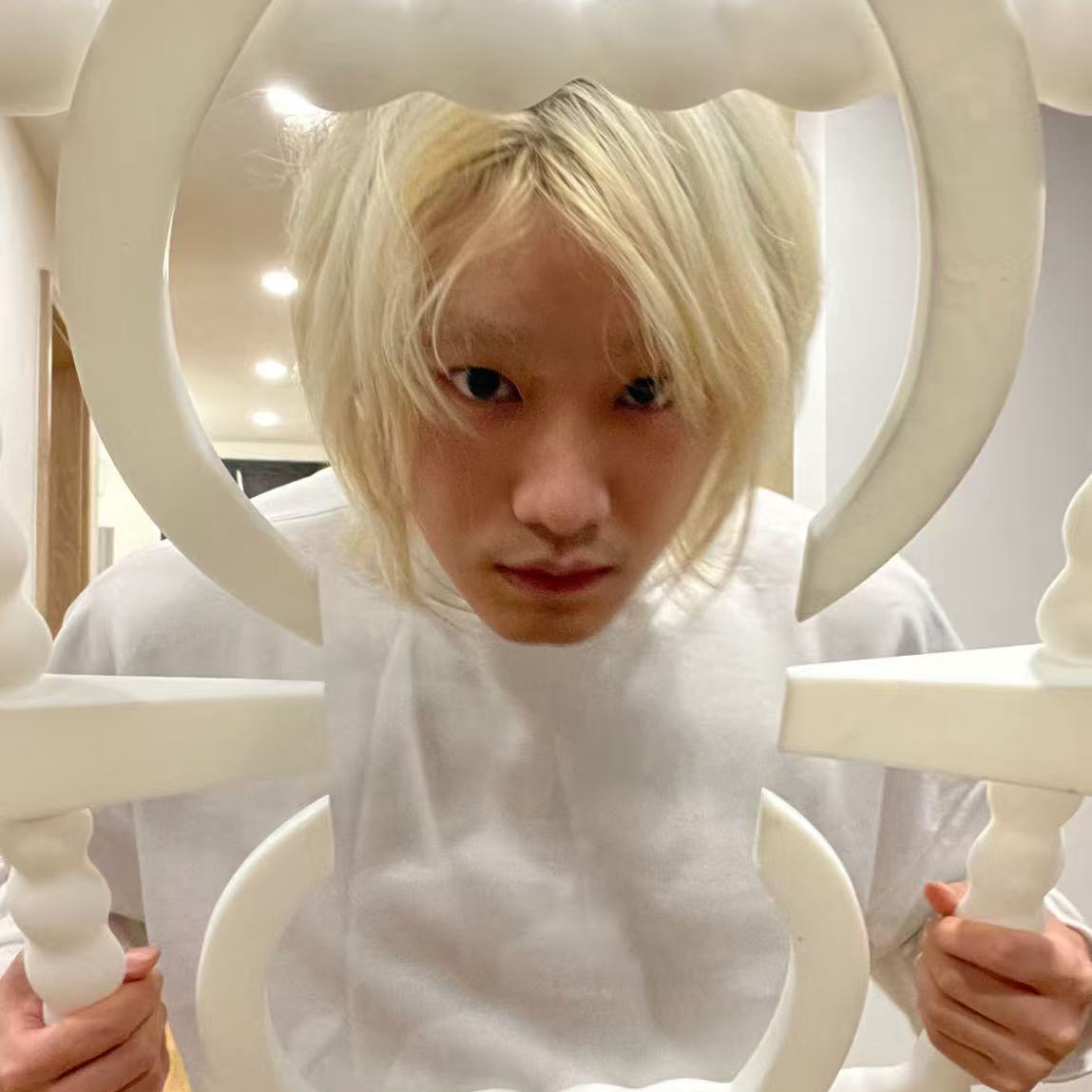
LazyBackHome
Zhang Nan (LazyBackHome) is a visual artist, moving image artist, and director. She received her Master’s degree from the University of the Arts London in 2024 and is currently living and working in Hangzhou. She has participated in a residency at the Swatch Art Peace Hotel. Working with video, sculpture, and printmaking, her practice focuses on image politics in the post-globalization era, media simulations, and contemporary storytelling. By reinterpreting myths, fables, news images, and popular culture symbols, she explores how images shape reality, reflect power relations, and influence social narratives.
Her works have been screened at HAU2 in Berlin, the Neuer Kunstverein Wien in Vienna, the Barbican Centre in London, the Venice Arsenal, The Wrong Biennale, the Art Museum of Nanjing University of the Arts, the Goethe-Institut in Beijing, First Film Festival, and Fotografiska. Her works have also been exhibited at the Power Station of Art, Ars Electronica, Ota Fine Art Gallery, Tank Shanghai, Mikke Gallery, and INNA Art Space. She has been shortlisted for the Best New Director Award at In Motion London by Playgrounds, the Best Moving Image Award at Aisolation, and the Best Image Award at Digerati Experimental Media Art Festival. In 2022, her work was presented by Imaginary Laboratory and Martin Goya Business in the exhibition “IT’S ALL TRUE, MAN” at B1ock Gallery. In 2024, she presented her solo exhibition “Apple of Sodom”.
Her works are held in collections including White Rabbit Gallery (Australia), CC Foundation, Daisuke Miyatsu Collection, and B1ock Gallery.
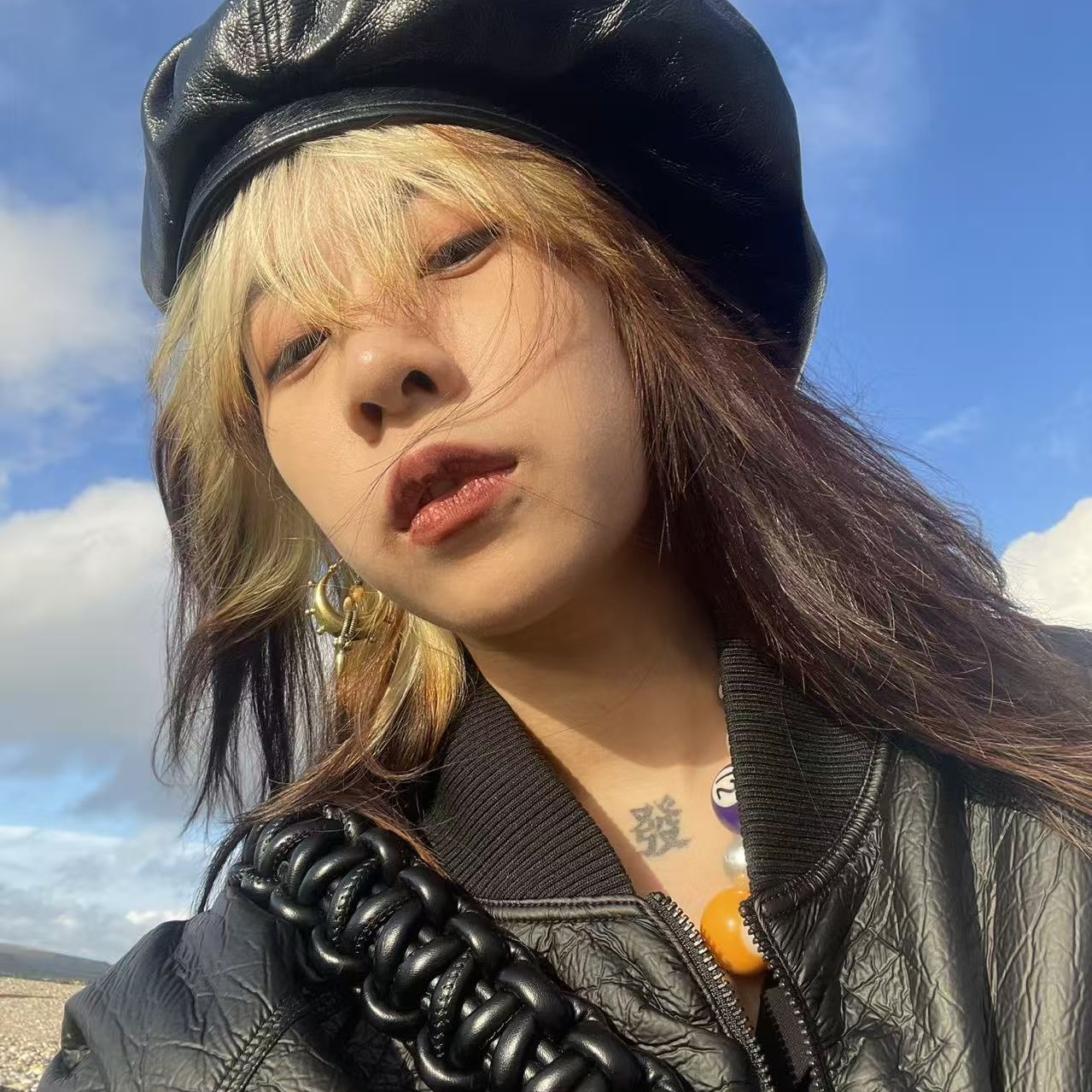
Zhang Ting
b. 1999, Ningbo, Zhejiang, China. Zhang Ting received both his B.A. and M.F.A. from the School of Intermedia Art at the China Academy of Art and is currently pursuing a second Master’s degree in the Department of Painting at Tokyo University of the Arts, Japan.
His practice encompasses installation, experimental video, and painting. Closely engaged with the present, his work takes the visual experiences of childhood in China during the 2000s and 2010s as its point of departure. By retrieving and distilling images from childhood memory, he recontextualizes familiar yet forgotten figures within contemporary artistic discourse. Through these visual elements that have been repeatedly reproduced, consumed, and forgotten, Zhang reexamines the relationship between individual experiences of growing up and broader social transformations, constructing an ongoing reflection on contemporary reality.
He has held solo exhibitions at MARTIN GOYA BUSINESS VERRE LIQUIDE, MARTIN GOYA BUSINESS HOME Theatre, and Ren Community Art Museum in 2023 and 2022, and presented individual projects at SURPLUS SPACE, ScheinSpace, and dongx3 in 2022 and 2021.
His works are held in the collections of museums, galleries, and institutions including MARTIN GOYA BUSINESS, White Rabbit Gallery (Australia), and the CC Foundation.