TITLE
媒体包
‘Time is paradoxical; it folds or twists; it is as various as the dance of flames in a brazier—here interrupted,
there vertical, mobile, and unexpected.’
— Conversations on Science, Culture, and Time: Michel Serres with Bruno Latour
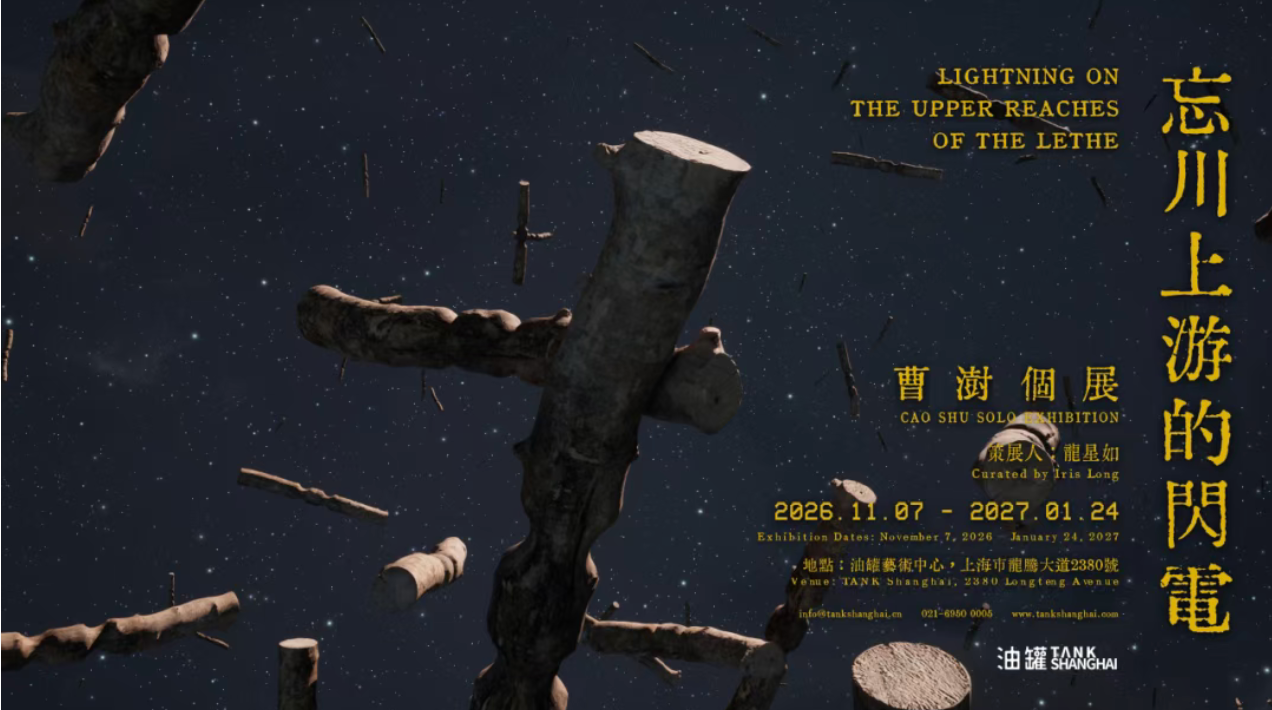
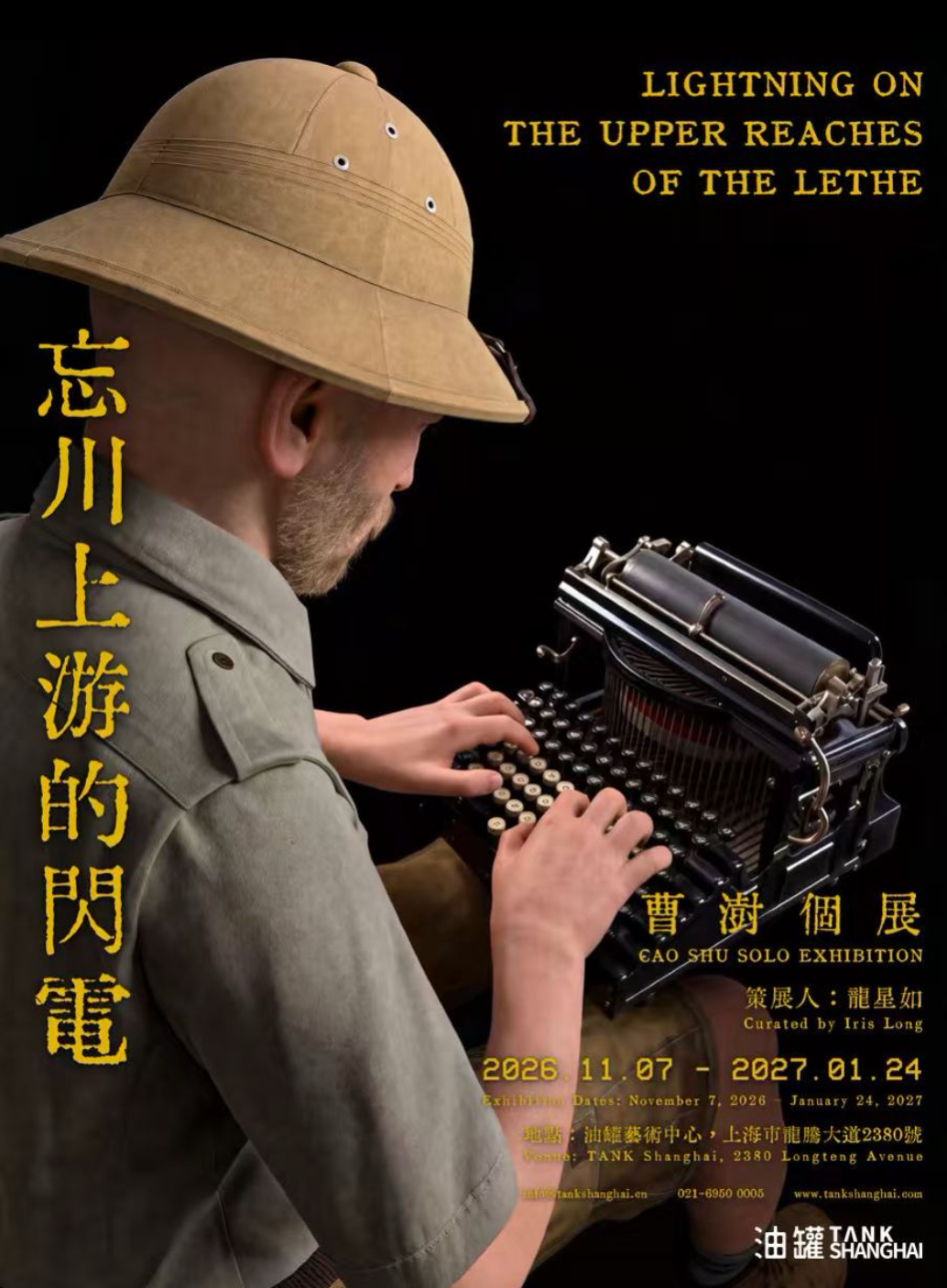
Across many mythological traditions, the River Lethe is imagined as a river of oblivion, whose waters erase all memory. Even the word lethargy derives from the same root. Lethe can also be understood as the hidden current beneath linear time: a subterranean river into which all things dissolve back into indistinction, before they are permitted to return as singular beings. Lightning on the Upper Reaches of the Lethe seeks to seize those fleeting instants when the chaos of history is briefly illuminated—when seemingly unrelated things suddenly become connected, and obscure constellations of relation momentarily conduct once more. Cao Shu’s works trace a series of unsettling synchronisms across modern history: nineteenth-century colonial surveys attempting to prove that two differently named rivers shared a single origin; the ghostly overlap between the flash that erased bodies in Nagasaki and the photographic flash that fixes a subject upon film; science-fiction film narratives propelled by absent protagonists; and images from the visual cortex of deceased mice, drawn onward by invisible
memories.
These seemingly disparate episodes converge upon a single question: might there be such a thing as an irrational history of technology? Colonial triangulation, polygonal meshes in digital modelling, datasets for training artificial intelligence, and the meticulous archives of cortical activity all translate the heterogeneous sea of lived phenomena into a lucid, linear cognitive universe. Yet beneath this technological surface—so clear, so rectilinear—the meandering river of Lethe continually returns, folding fear and memory back into the landscape.
Mark Hansen has proposed the notion of a worldly sensibility, directing attention to the conditions under which experience takes shape before we can ever say I feel. Bodily processes, environmental forces, and technical operations unfold beneath the threshold of consciousness, feeding forward into perception and action, while consciousness itself arrives only afterwards. Cao Shu’s practice is remarkably attuned to these opaque moments of feed-forward—to the upstream of Lethe, where anima and animus have yet to be separated by conscious interpretation, and where the non-human mysticism of climate and geology remains at work.
In this sense, Lightning on the Upper Reaches is not merely a collection of stories woven from coincidence and omen. It proposes a more permeable mode of historical perception, one capable of gently unsettling the inear narrative of progress constructed through invention, institutions, and media. Each flash of lightning briefly illuminates the darkness before the world falls back into shadow. Yet the lightning returns, again and again, upstream of Lethe.
ARTIST
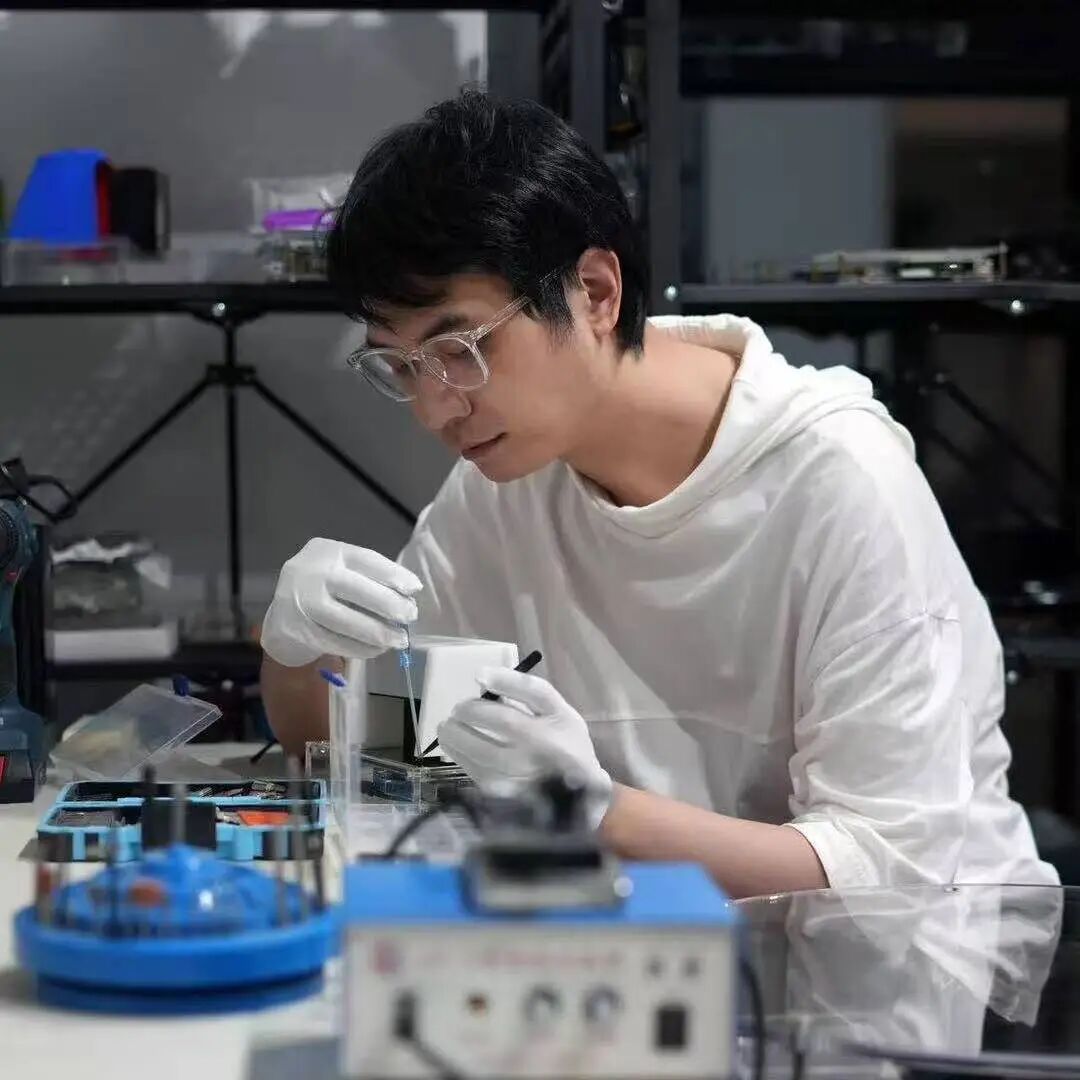
Cao Shu
Cao Shu lives and works in Hangzhou, China, and teaches at the China Academy of Art. His practice spans game installations, 3D-rendered animation, multi-channel video, and AI-generated imagery. Drawing speculative narratives from the history of technology, he traces where archives fall silent and continues those stories; his works often unfold in a quasi-fictional, spectral register, constructing scenes of philosophical speculation.
Cao Shu is the recipient of the OCAT × KADIST Emerging Media Artist Award (2022), the Exposure Award at PHOTOFAIRS Shanghai (2021), and the BISFF Award for Outstanding Artistic Achievement (2017). He has been shortlisted for the 7th VH AWARD (South Korea), the MGM Discoveries Art Prize at Art Basel Hong Kong 2026, the Ducato Prize 2025 (Italy), and the E.A.T. Prize 2024. His recent works have been shown at institutions including Kunsthaus Baselland, the White Rabbit Gallery (Sydney), Matadero Madrid Centre for Contemporary Creation, M+ (Hong Kong), UCCA Dune, the Power Station of Art (PSA, Shanghai), the Asia Society Hong Kong Center, BY ART MATTERS Museum, and the National Museum of China; he has held solo exhibitions at HOW Art Museum (Shanghai), Zhejiang Art Museum, the Imaginary Mechanics Lab at BY ART MATTERS, Muffatwerk (Munich), and Koganecho (Yokohama), among others.
In recent years Cao Shu has undertaken residencies at Einsamkeit Castle (Stuttgart, 2026), KADIST (San Francisco, 2024), Muffatwerk (Munich, 2023), Koganecho Bazaar (Yokohama, 2019), and Atelier Mondial (Basel, Switzerland, 2017). His films have been selected for the main competition of international festivals worldwide, including DOK Leipzig (Leipzig Documentary and Animation Film Festival), the Annecy International Animation Film Festival, DMZ Docs (South Korea), the Guanajuato Experimental Film Festival (Mexico), the Milano Film Festival, the Ottawa International Animation Festival, and the International Short Film Festival Hannover. His work is held in collections including KADIST, the White Rabbit Gallery, BY ART MATTERS Museum, Zhejiang Art Museum, HOW Art Museum, and the Deutsch-Englische Stiftung.
CURATOR
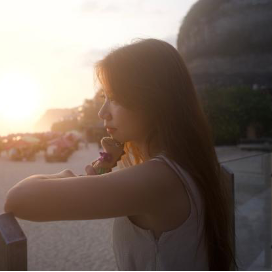
Iris Xinru Long
Iris Xinru Long is a curator and researcher. She currently serves as Head of Curatorial Research, Exhibitions Department, at JD Art Museum, and was a Berggruen Fellow (2022–23). Her research focuses on China’s technological infrastructure and the history of science and technology.
Long has curated or co-curated a number of exhibitions that explore the intersection of art, science, and technology, including Lying Sophia and Mocking Alexa (winner of the Hyundai Blue Prize, Hyundai Motor Studio Beijing); Blue Cables in Venetian Watercourses (Grand Prize, PSA Emerging Curator Program, Power Station of Art, Shanghai); the technology and art section of the inaugural Beijing Biennale, Earth Heat Flow: The Visitor Who Returns to Solar Time; Larva of Time at the Institute of Contemporary Arts, NYU Shanghai; Space: Inner Glow at Fotografiska Shanghai; and Cosmos Archaeology, co-organized with EPFL and shown at the Shanghai Astronomy Museum and the National Museum of China.
Her research has been published or presented at the Centre for Research in the Arts, Social Sciences and Humanities (CRASSH), University of Cambridge; the Warburg Institute; the UCL Institute of Advanced Studies and the Centre for Outer Space Studies, UCL; ZKM | Center for Art and Media, Karlsruhe; and MediaLab Madrid (Matadero), among other institutions. She also teaches part-time on the MA Spatial Narratives programme at Central Saint Martins, University of the Arts London.