ABOUT THE EXHIBITION
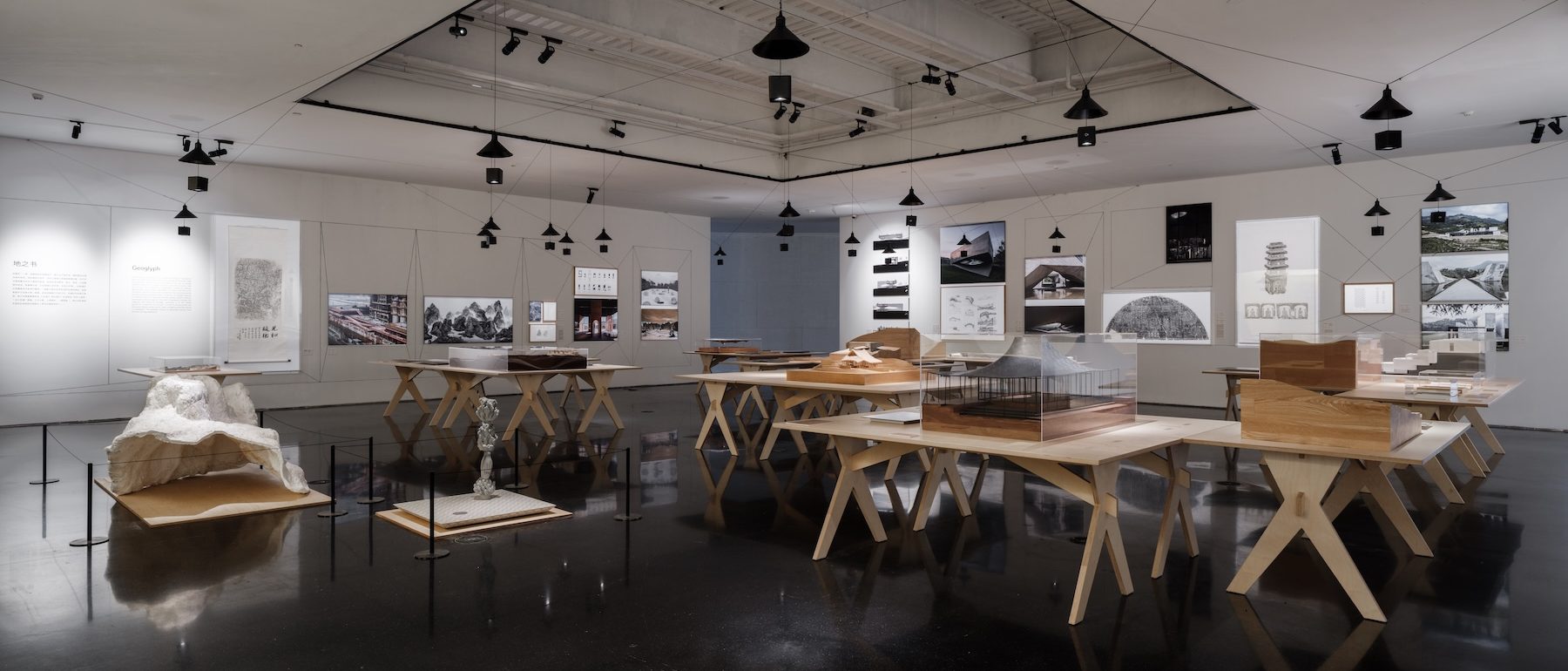
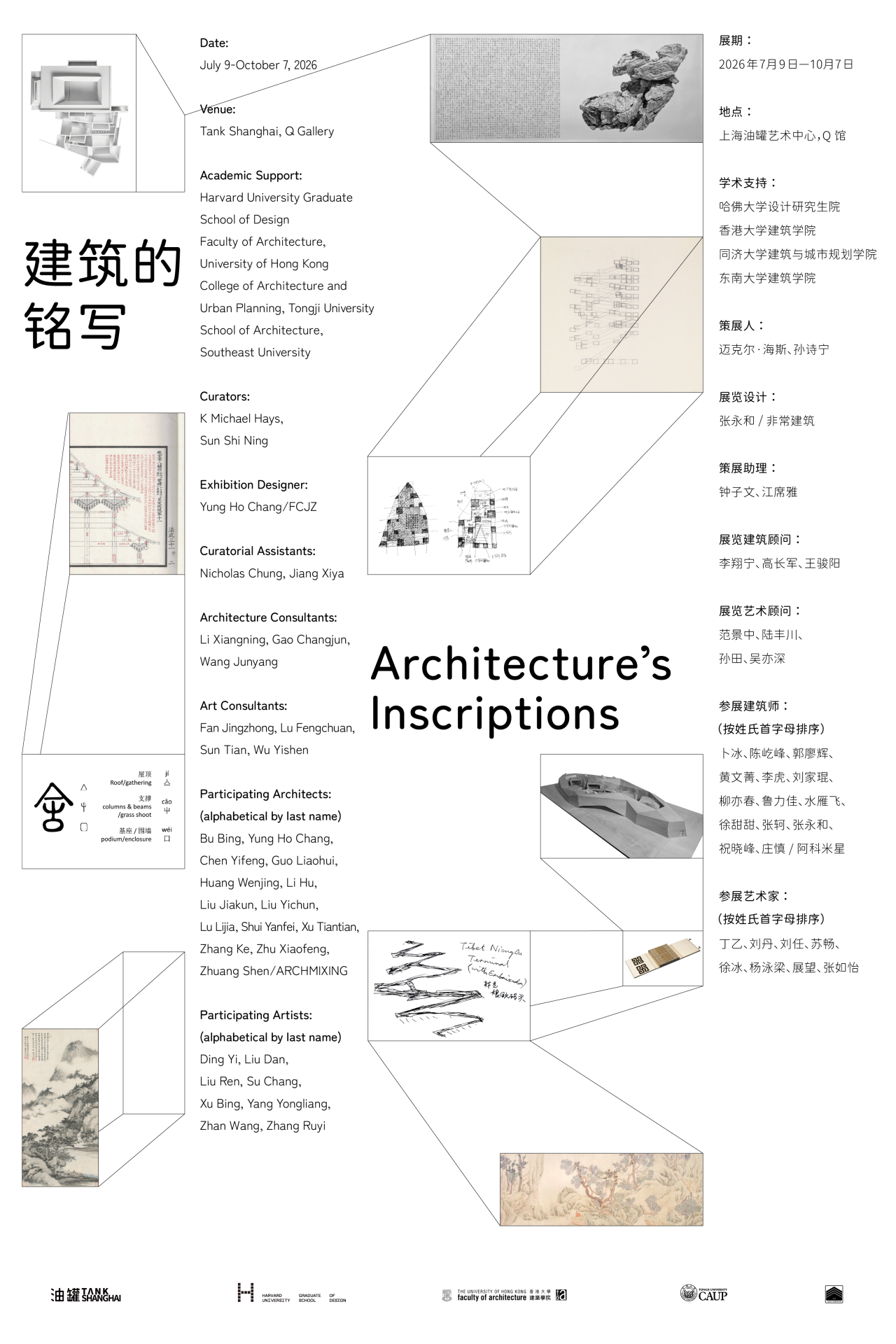
“Architecture’s Inscriptions” will open this July at TANK Shanghai . Running from July 9 to October 7, 2026, this exhibition brings together works by contemporary architects and artists alongside ancient Chinese manuscripts, rubbings, scholar’s rocks and paintings, exploring various forms of synthetic poetics grounded in inscription.
Since the 1990s, K Michael Hays has pursued in-depth research on architecture’s inscriptions as a sustained theoretical project. At the invitation of Tongji University, his years of teaching and research on the relationship between architecture, poststructuralist thought, and the writing of history led to several colloquia focusing on the current conditions of design practice, especially in China, and recent developments in theory that hope to map those practices into diagrams of thought for possible futures. This work was further developed at the Harvard University Graduate School of Design, where the joint research and seminar led by Professor Hays and Dr. Sun, in collaboration with the Harvard Art Museums, allowed students to engage with various historical objects and material agencies that produce wide-ranging conditions of inscription. These ranged from ancient Chinese manuscripts, paintings, handscrolls, ink rubbings, and scholar’s rocks to contemporary artworks by Chinese artists, including Liu Dan, Zhan Wang, and Xu Bing, as well as an in-class discussion on “digital shanshui” with Yang Yongliang.
This inquiry now finds expression at Shanghai’s West Bund, where the architecture of this riverside district provides a generative site for industrial building heritage and modern culture, analyzing the vectors of habitation already inscribed on the site, and expansively reinscribing possible supports for our future lives. All this led curators Hays and Sun to the proposition of a synthetic poetics that becomes conceivable when architecture no longer begins with idea, representation, and determination, but rather with situation, process, propensity, and reiteration.
The exhibition “Architecture’s Inscriptions” opens a space for the exploration of a contemporary synthetic poetics that not only organizes and propels the imbricated machinery of the different Chinese arts of inscription but also enables it to set into its structured field the discipline of architecture. A longstanding Chinese art tradition emphasizes the interconnectedness of calligraphy and painting, which share a common technê of presentation in their use of ink and brush and an association with the scholar’s rock, focus of the literatis’ meditation and inspiration for their art forms. But the use of language and graphic codes also presupposes a retention of preformed differences (letters already written, marks that subsist through time) and a spacing out of these-a play of traces. Producing epistemic things means engaging in the potentially endless production of traces, where any referent is but a reiteration, always already occupied by another inscription. Inscriptions thus move across genres as well as through time.
ABOUT THE CURATORS
K Michael Hays
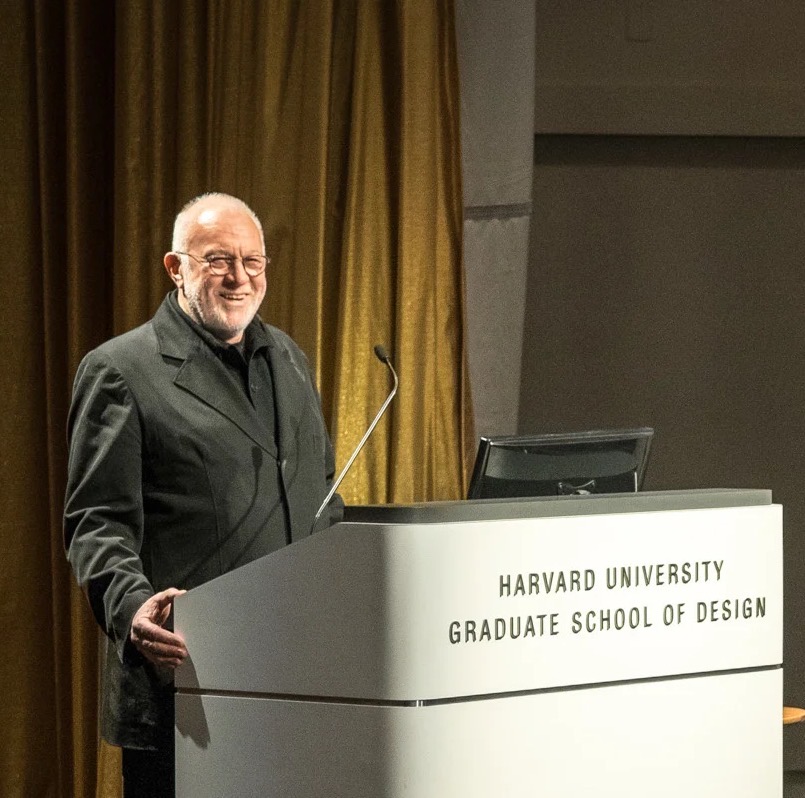
K Michael Hays is the Eliot Noyes Professor of Architectural Theory at the Harvard University Graduate School of Design. As a teacher, writer, and curator, Hays has played a central role in the development of architectural theory; his work is internationally recognized. He was the founding editor of the journal Assemblage (1986-2000) and the first Adjunct Curator of Architecture at the Whitney Museum (2000-2009). His research and scholarship have focused on areas of European and American modernism and critical theory, as well as on theoretical issues in contemporary architectural practice. Hays received the Bachelor of Architecture degree from the Georgia Institute of Technology in 1976. From MIT, he received the Master of Architecture degree in Advanced Studies in 1979, and the Doctor of Philosophy in the History, Theory, and Criticism of Architecture and Art in 1990. Notable publications include Modernism and the Posthumanist Subject (1992), Architecture Theory since 1968 (1998), Architecture’s Desire (2009), and, with Andrew Holder, Inscriptions: Architecture Before Speech (2022). For his sustained scholarship, Hays received a 2026 Arts and Letters Award in Architecture from the American Academy of Arts and Letters.
Sun Shi Ning
Sun Shi Ning received her Doctor of Design degree in Architectural History and Theory from Harvard University Graduate School of Design. She previously earned dual master’s degrees in Architecture and Urban Design from Harvard GSD and a Bachelor of Architecture degree from Cornell University. Her research explores new frameworks for reading contemporary architectural practices that move beyond semiotic or representational lenses by investigating what precedes architectural figuration: inscription, technicity, materiality, and the mnemonic. Her interdisciplinary collaborations with artists, programmers, and curators have led to a number of exhibitions. She currently serves on the Asian Curatorial Committee at the Harvard Art Museums and has taught at institutions in the United States and China.

Exhibition Designer
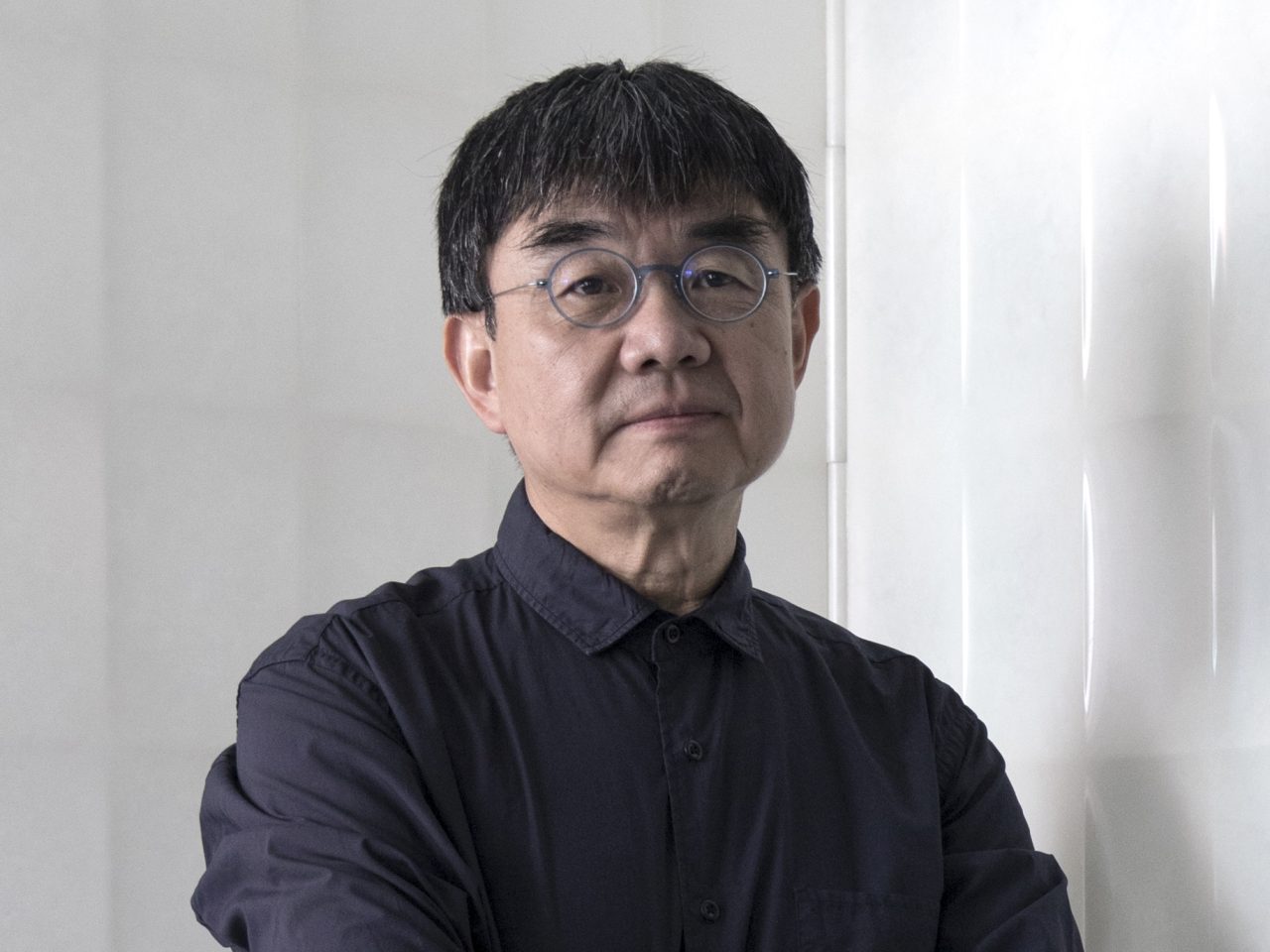
Yung Ho Chang, FAIA
Educated in both China and the US, Yung Ho Chang received a Master of Architecture degree from the University of California, Berkeley, in 1984. Since 1992, he has been practicing in China and co founded Atelier Feichang Jianzhu (FCJZ) with Lijia Lu in 1993. Over more than three decades of architectural practice, he has received numerous prizes and honors, including First Place in the Shinkenchiku International Residential Design Competition in 1986, the Progressive Architecture Citation Award in 1996, the 2000 UNESCO Prize for the Promotion of the Arts, the Academy Award in Architecture from American Academy of Arts and Letters in 2006, and the 2016 China Architecture Media Award Excellence in Practice. The Jishou Art Museum has won the American Institute of Architects (AIA) 2020 Architecture Award and the ArchDaily China Building of the Year 2020 Award. He served as a jury member for the Pritzker Architecture Prize from 2011 to 2017. Chang has taught at various architecture schools in the US and China: he served as a Professor and Founding Head of Graduate Center of Architecture at Peking University from 1999 to 2005, held the Kenzo Tange Chair at Harvard GSD in 2002, and the Eliel Saarinen Chair at the University of Michigan in 2004. Between 2005 and 2010, he headed the Architecture Department at the Massachusetts Institute of Technology (MIT) and assumed the position of Dean of the Faculty of Architecture at the University of Hong Kong in 2025.