ABOUT THE EXHIBITION
Press Kit
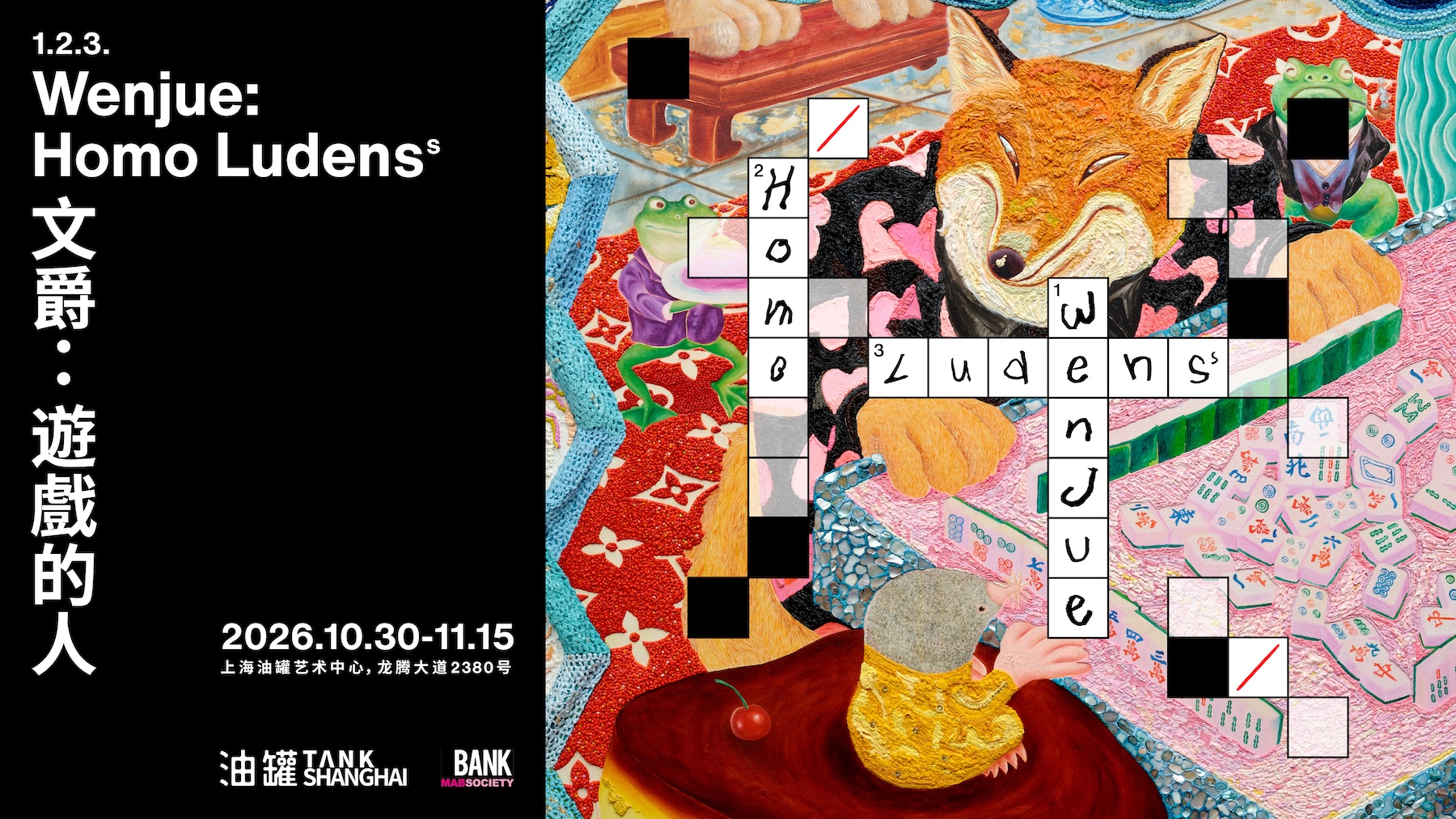
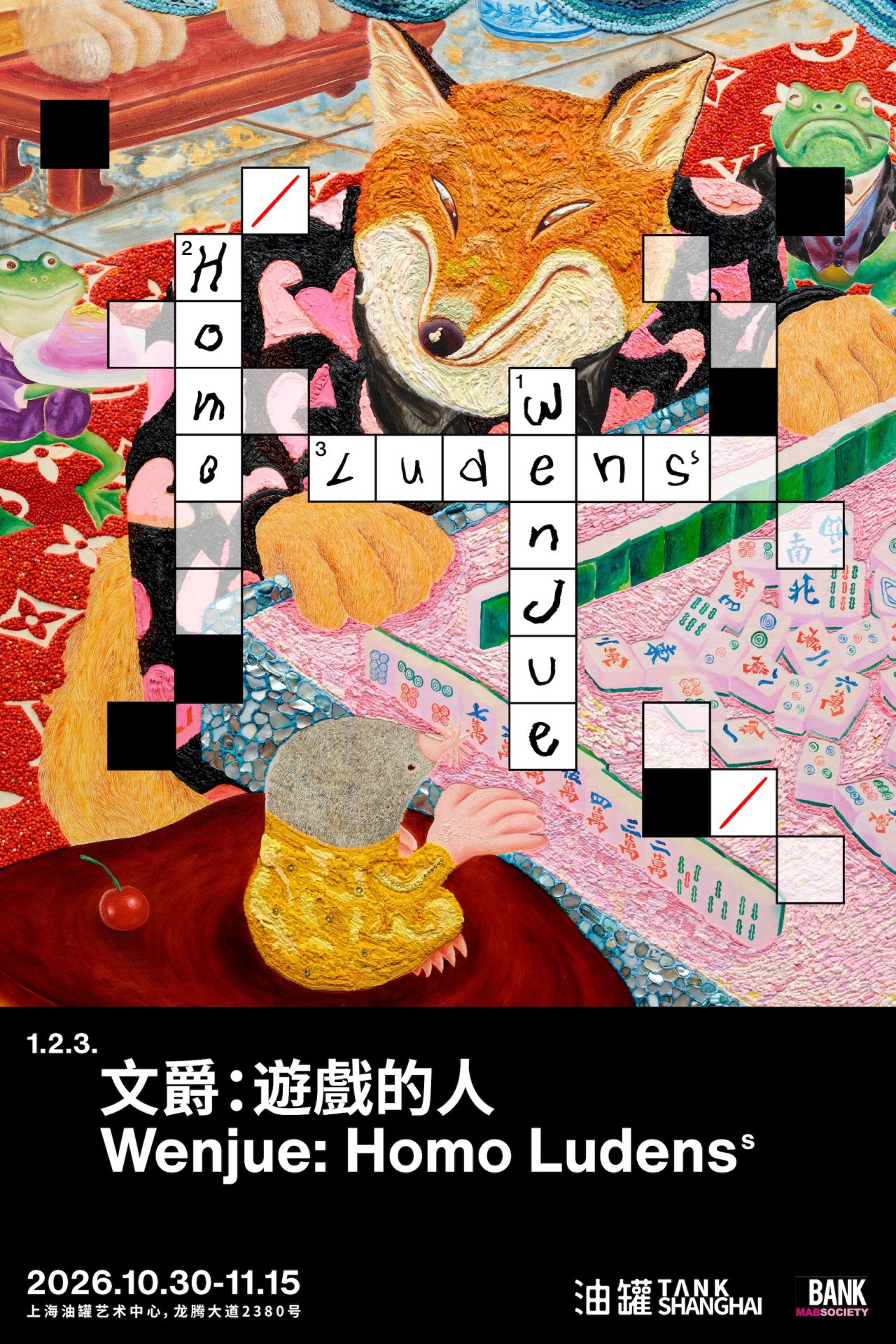
As the first institutional solo exhibition by Gen Z artist Wenjue, the exhibition’s title is taken from the classic work on play by Dutch historian and linguist Johan Huizinga. This series of paintings focuses on the multifaceted dimensions of the identity of “Homo Ludens (the Player)”, seeking to delve deeply into the bodily perceptions, emotional flows, and insights into life that arise within the individual during the process of play, while capturing the spiritual experiences that emerge and the dramatic scenarios they engender: Within the protected realm of play — a closed, pure spatial domain detached from reality — how do players generate gazes, communication, and interaction, weaving intriguing connections that link play to transcendental sensory experiences? Building on this, the exhibition further explores how game mechanics shape our desires, and how our desires, in turn, drive, influence, and continually give rise to new forms of play.
The Paidia series presented in this exhibition depicts Snakes and Ladders and related game variants (Minesweeper, mazes), mapping the cycles of individual life and the ongoing struggle between personal choice and fate. The three works in the exhibition revolve around the Player’s search, within different games, for the legendary three souls—Tai Guang, Shuang Ling, and You Jing.
Homo Ludens continues the artist‘s exploration of card and board game painting, stemming from his research into card-playing scenes in Western art history (particularly Cézanne’s and La Tour’s card players) and his reflections on recent experiences competing in card shops and gaming halls across Shanghai, allowing viewers to sense a connection across time and space through painting.
The unique “liminality” of the card-playing arena makes it, beyond mere gameplay, more akin to a highly realistic role-playing game (RPG). When players take their seats, their everyday, mundane identities fall away, and they become agents of the will of the deck in their hands.
The unique “threshold nature” of the board and card gaming arena makes it, beyond mere gameplay, more akin to a highly realistic role-playing game (RPG). When players take their seats, their everyday, mundane identities fade away, and they become agents of the will embodied in the decks in their hands. During the game, opponents’ mental states, body postures, and facial expressions influence one another and serve as key factors directly affecting card plays and the outcome of the match. This intersubjectivity — the mutual interpenetration of bodies — transforms the match into a dual contest of mind and body. This microcosmic gaming arena also contains a metaphor for modern life. The card table becomes a microcosm of the world, where the interweaving of randomness and strategy serves as a true reflection of contemporary people facing an uncertain fate. The brief clasp of cold palms and the knowing smile exchanged after the game become a sacred ritual for establishing fleeting yet solid connections between people in an atomized metropolis. This series serves both as a tribute to works on similar themes in art history and as a vivid commentary to how, in the digital age, “Homo Ludens” reconstructs subjectivity and seeks authentic tactile experiences through play.
ABOUT THE ARTIST
Wenjue
Wenjue was born in Beijing in 2001. He studied at the Académie de la Grande Chaumière in Paris in 2015 and then at Atelier François Legrand in 2016. In 2019, he became a lifelong member of the Fondation Taylor. Wenjue currently lives in Shanghai. His work revolves around the experimentation with the medium of “oil paints”. Through the physical accumulation of oil paints, he makes three-dimensional rock-like and bas-relief sculptures collide with two-dimensional paintings, creating a new dialogue and giving a new definition to structure and image.